

Good questions, straight answers.
Quick answers about planning, prices and changes. Can’t find yours? Ask us on WhatsApp.
Planning and booking
How does planning a trip with you work?
Tell us who is travelling, roughly when, for how long and the style you like, through the planner, WhatsApp or email. A planner in Arusha replies within the hour with a day-by-day plan and a clear price. We adjust it together until it feels right, and only then do you book.
Are your safaris private?
Yes. Every safari is private: your own vehicle and your own guide, never shared with strangers. You set the pace, stay longer at a sighting and start early for the best light.
Can I change the itinerary you send?
Of course. Every trip is tailor-made, so swap parks, add a night, change a lodge or add Zanzibar. We send an updated plan and price each time, at no charge.
How far ahead should I book?
For July to October, the calving season (January to February) and Christmas, book six to twelve months ahead, as the best camps fill early. At other times a few weeks is often enough, and we can sometimes arrange trips at short notice.
Do you only plan trips in Tanzania?
Yes. Safaris, Kilimanjaro climbs, Zanzibar and the coast, and day trips around Arusha and Moshi. Focusing on one country is what lets us know it well.
Prices and payments
What is included in the price?
Usually your private vehicle and guide, park and conservation fees, accommodation, meals on safari, drinking water and airport transfers. Each quote lists exactly what is included and what is not, so there are no surprises.
What is not included?
International flights, visas, travel insurance, tips and personal extras such as drinks at lodges or optional activities like a balloon flight. We tell you the cost of anything optional before you decide.
How do I pay?
A deposit secures your booking and the balance is due before you travel. Exact amounts, dates and payment methods are written in your quote and booking confirmation.
Is there a fee for planning?
No. Planning, changes and quotes are free and carry no obligation. You only pay once you are happy with the plan.
How much should I tip?
Tips are personal and never compulsory, but they matter to guides and crews. We send a simple tipping guide with your booking, with suggested amounts for safari guides, Kilimanjaro crews and lodge staff.
On safari
What vehicle will we travel in?
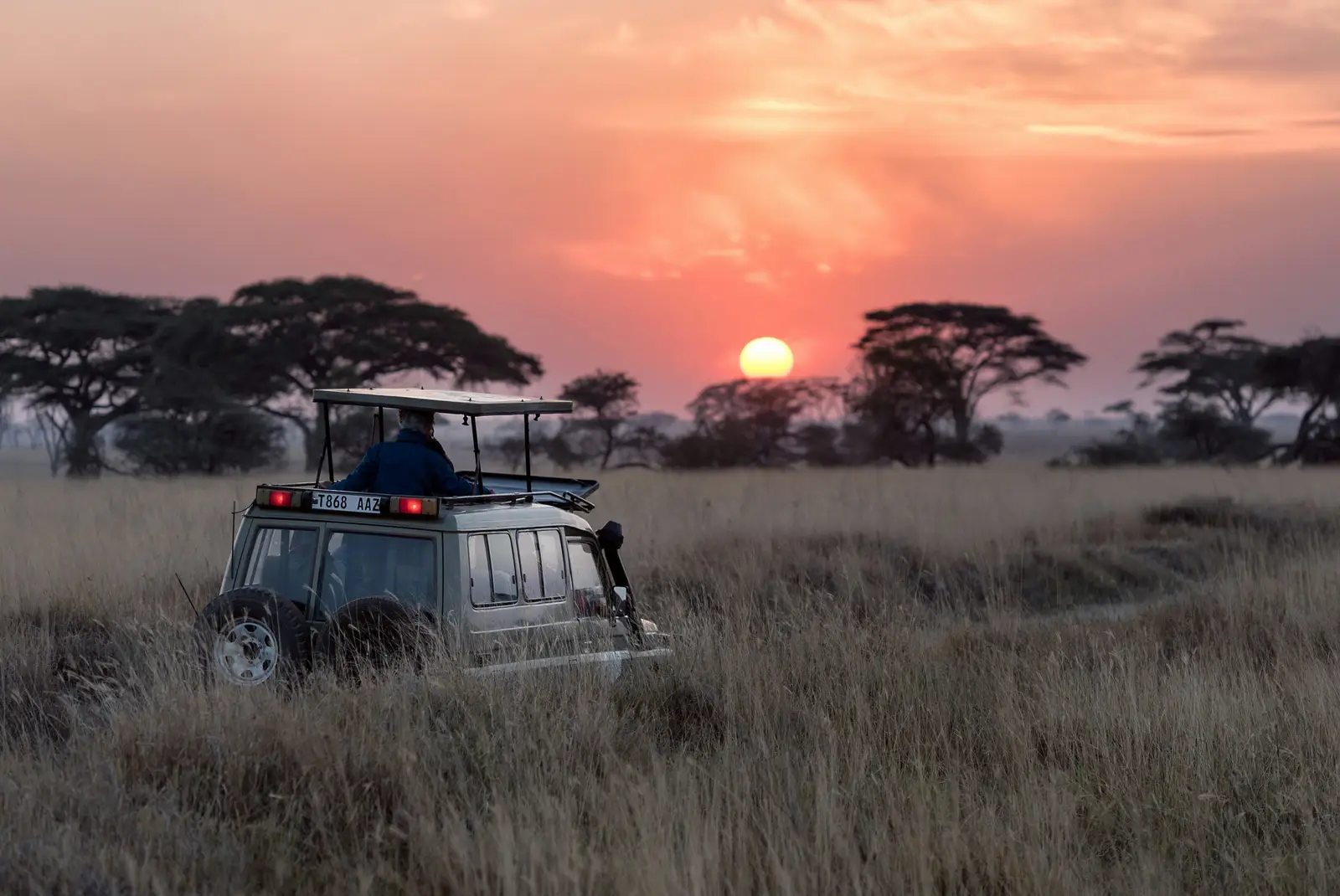
A 4x4 Land Cruiser with a pop-up roof, a window seat for everyone, charging points, a fridge or cool box and binoculars. It is yours for the whole safari.
What is a typical day like?
Most days start early with coffee and a morning game drive, when animals are most active. Lunch is at the lodge or a picnic in the park, then an afternoon drive until the park closes around sunset. Your guide adapts the day to what you want to see.
When is the best time to go?
Tanzania is good all year. June to October is dry, with easy wildlife viewing. January to March brings the calving season in the southern Serengeti and Ndutu. April and May are green and quiet, with lower prices. We plan around the month you can travel.
Is a safari suitable for children?
Yes, and private safaris make it easier: you stop when they need a break and choose family-friendly lodges. Some camps have minimum ages, and we suggest shorter drives and malaria-free options when that helps.
Will we see the Big Five?
Lion, elephant and buffalo are seen on almost every northern-circuit safari. Leopards are shy and rhinos rare, and the Ngorongoro Crater gives you the best chance of a rhino. Nothing in the wild is guaranteed, but our guides know where to look.
Kilimanjaro
Do I need climbing experience?
No. Kilimanjaro is a long walk, not a technical climb. Good fitness helps, but the biggest factor is altitude, which is why we recommend routes with more days to acclimatise.
Which route should I choose?
For most climbers, Lemosho or Machame on seven or eight days give the best mix of scenery and summit success. Marangu has huts instead of tents, and Rongai is quieter and drier. Our route finder helps you compare them.
Who will be on the mountain with us?
A licensed lead guide, assistant guides, a cook and porters who carry the camp and your main bag. Your guides check your health twice a day and carry oxygen and first aid.
When is the best time to climb?
The driest months are January to early March and June to October. April, May and November are wetter, but the mountain is quieter. We advise on each month on our Kilimanjaro page.
Zanzibar and the coast
Can I add Zanzibar to my safari?
Yes, it is the most popular way to end a safari. A short flight from Arusha or the Serengeti takes you to the island, and we arrange the flights, transfers and beach stay.
Which part of Zanzibar is best?
The north has beaches you can swim from at any tide and lively sunsets. The east coast is quieter, with big tidal flats. Stone Town is for history, food and markets. Our Zanzibar page helps you match a coast to your style.
How many nights should we spend there?
Three to five nights is the sweet spot for most travellers: one in Stone Town if you like history, the rest on the beach.
Health, safety and visas
Is Tanzania safe to visit?
Tanzania is one of the most welcoming and stable countries in East Africa. On a private trip you are met at the airport and looked after by our team throughout, and our Arusha office is on call for the whole journey.
Do I need a visa?
Most visitors need a tourist visa, which you can apply for online through the official Tanzania e-visa site before you travel. Rules and fees depend on your nationality, so check them for your passport when you book.
Which vaccinations do I need?
A yellow fever certificate is required if you arrive from, or transit through, a country with yellow fever risk. Malaria tablets are usually recommended for the parks and the coast. Ask your doctor or travel clinic for advice that fits you.
Do I need travel insurance?
Yes, please travel with insurance that covers medical care and evacuation, and covers altitude up to 6,000 m if you are climbing Kilimanjaro.
Packing and practical
What should I pack for a safari?
Soft bags rather than hard cases, neutral clothes in layers, a warm fleece for early mornings, a hat, sunscreen, binoculars and a camera. Bright white and dark blue or black are best avoided in the parks.
Is there a luggage limit?
If your trip includes light aircraft flights, the limit is usually 15 kg per person in soft bags. On road safaris there is more room, but soft bags still pack best in the vehicle.
Will I have phone signal and Wi-Fi?
Most lodges have Wi-Fi, often slower in remote camps. There is mobile signal in many park areas, and a local SIM is easy to buy on arrival.
Which currency should I bring?
US dollars are widely used for tips and extras. Bring notes printed in 2009 or later, as older ones are often refused. Cards work at most lodges and in towns, sometimes with a fee.
Ask us directly and a planner will answer you personally.
Let's plan your trip. Karibu.
Free and no obligation. A real specialist replies within the hour with a tailor-made plan and clear prices.